
Find Peachtree City Residents
The best first source depends on what is known. A street address points to the Fayette County tax roll and parcel map. A full name can be checked in the deed index, local court docket, voter tools, probate files, or official state registers. An older address calls for plats, census schedules, deeds, and Peachtree City's local history holdings. No source is a complete residents directory, and a match should be tied to both a place and a date.
Ownership is not the same as occupancy. The owner on a parcel card may receive tax mail elsewhere, while a renter or family member may never appear on that card. Treat every result as one piece of evidence. Record the spelling, search date, court or office, and any parcel, case, book, or page number before moving to the next source.
- Search Fayette qPublic by owner or location address and save the parcel ID, situs address, deed book and page.
- Check the appropriate Georgia voter channel. My Voter Page is for a person's own registration; authorized list products serve broader research.
- Use the Fayette Clerk Property Index to connect the owner name with recorded deeds, liens, and plats.
- Check a second official source, such as a court docket, probate file, vital record, or professional register.
- When the web ends, inspect at the clerk counter or send a specific Georgia Open Records Act request to the correct custodian.
That sequence turns a loose name into a dated Peachtree City record trail. It also shows where certainty ends.
Peachtree City Directory Offices
Peachtree City records are split by jurisdiction. The city clerk keeps municipal material such as permits, reports, licenses, and city correspondence. Fayette County offices in Fayetteville hold the durable land, court, tax, probate, and election records. Georgia agencies keep statewide vital, voter, correctional, business, and license systems. The Peachtree City residents directory therefore works best when each question is routed to the office that created the record.
The Fayette Clerk offers weekday counter inspection from 9 a.m. to 5 p.m. Online entries are informational. Primary files or certified copies are the sound choice when the exact text matters.
The Fayette online-services page shows the court and property access points available from one clerk office.

The screen helps route a search, but the office remains the final source for copies and certification.
Search Peachtree City qPublic
Fayette County's qPublic system is the strongest current starting point for a Peachtree City address. It can reveal the titled owner, the address where tax notices go, the property's situs address, parcel number, legal description, sales, assessed values, deed book and page, building facts, and exemption indicators. A situs address identifies the land itself. A mailing address tells where the owner receives tax mail. They may be different.
Choose a search mode that fits the input. A broad street-name search can locate an uncertain number; an owner search may need a surname or business-name variant. The parcel number is the cleanest bridge to the GIS map, and book/page is the bridge to the deed index.
| qPublic field | Input | Best use |
|---|---|---|
| Owner Name | Surname or entity | Find parcels held by a named party |
| Location Address | Number and street | Open the card for a Peachtree City site |
| Parcel Number | County parcel ID | Return to one exact tax parcel |
| Legal Description | Subdivision, lot, or phrase | Follow land when an address changed |
| Map | Selected result | View the parcel and nearby tracts |
- Parcel
- A mapped unit of land with its own county ID.
- Situs address
- The physical location assigned to the parcel.
- Index
- A finding aid that points to a record, not necessarily the certified record itself.
- Roll
- An official list maintained for a defined public purpose, such as tax or voter administration.
Note: A homestead indicator can support owner occupancy, but it remains tied to a filing period and does not name every person in a home.
Current Peachtree City Resident Rolls
Current directory work draws from several official lists, each built for a different reason. The property roll names owners, not all occupants. The voter system confirms registration, not ballot choices. Deed and court indexes identify parties to recorded events. City permit files attach applicants, contractors, work, and dates to addresses. A careful Peachtree City residents directory search asks only what each source was designed to answer.
| Resident source | What it can connect | Keeper | Access route |
|---|---|---|---|
| Property roll | Owner, mailing and situs addresses | Fayette Tax Assessor | Free qPublic search; office fallback |
| Voter record | Registration and assigned precinct | Georgia SOS and Fayette Elections | Credentialed self-lookup or lawful list order |
| Deed index | Grantors, grantees, instruments | Fayette Clerk | Online index, clerk counter, eCertification |
| Court docket | Party role, case, date and status | Local and county courts | Docket, clerk request, supervised inspection |
| Permit file | Address, work, applicant and issue date | Peachtree City | Portal, monthly report, or city request |
Commercial people-finder products often blend stale and unrelated data without showing the source date. Official rolls have narrower coverage, but they name the custodian and give a route to the underlying record. Use the official source, then verify the result with another dated record.
Peachtree City Deed Trail
Once qPublic supplies a deed book and page or an owner name, the Fayette Clerk's property index can extend the trail. A grantor transfers an interest; a grantee receives one. Search both roles because the same person may appear on opposite sides of later transactions. Instrument type and recording date help distinguish a sale from a lien, plat, cancellation, or other filing.
The exact online starting year is not published on the public landing page. That gap matters. If the Peachtree City search reaches the end of the web index, inspect the older books at the clerk or use Georgia Archives county microfilm cards to identify early Fayette volumes. Counter inspection is free, while paper, electronic, and certified copies follow separate fee channels. A certified copy adds the clerk's seal; it is different from a screen image.
The Fayette Property Index entry page presents the official disclaimer before the search. That warning is a useful reminder to verify indexed details against the recorded instrument.
Peachtree City Voter Paths
Georgia provides two distinct voter routes. My Voter Page is a credentialed, one-person lookup that returns registration and precinct information after identifying inputs. Public voter-list products are a separate paid route. State law makes names and addresses available under O.C.G.A. §§ 21-2-225 and 21-2-234, while O.C.G.A. § 21-2-601 bars commercial use.
The distinction prevents a common mistake. My Voter Page is not a public citywide residents directory, and a purchased list is not proof that a person still lives at an address. VoteSafe can protect a qualifying voter's residence address. Georgia Safe at Home offers broader substitute-address protection for eligible survivors. No voter source reveals how anyone voted.
The Georgia My Voter Page form shows the identifying-input route for personal registration checks.
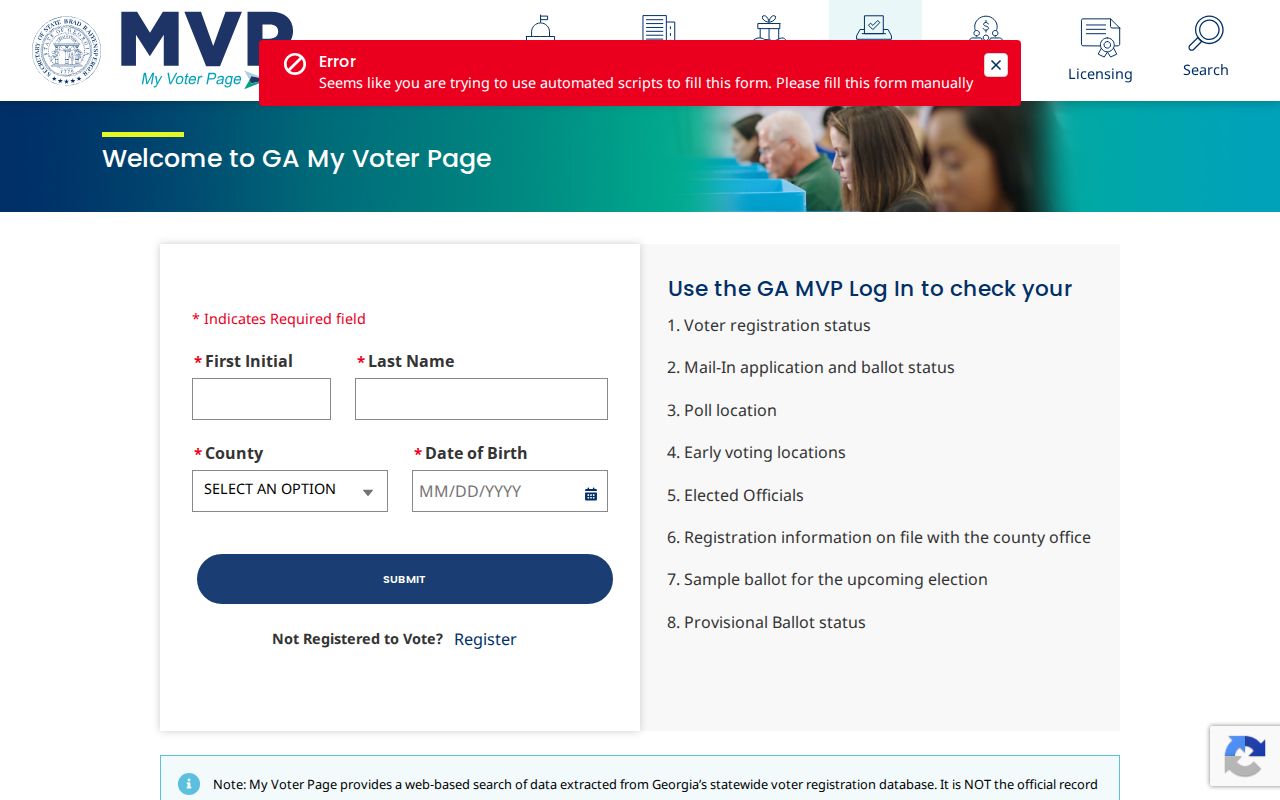
Use that form for its stated purpose and respect protected-address programs.
Verify Peachtree City Court Names
There is no single comprehensive Georgia trial-court search. Peachtree City Municipal Court handles city ordinance and misdemeanor traffic matters. Fayette Magistrate, State, Superior, and Probate courts hold different county cases. Federal matters use PACER. A missing result in one system does not clear every other jurisdiction.
The Fayette docket can show a case number, caption, party names and roles, filed date, cause, status, court, judge, hearing details, and docket events. Read the role. A name may belong to a plaintiff, defendant, petitioner, respondent, heir, or attorney. A charge is not a conviction, and the filing date may differ from the underlying event. Sealed, juvenile, adoption, and other restricted material will not be open.
The Georgia Courts access page explains that trial-court searching runs through providers and may require an account.
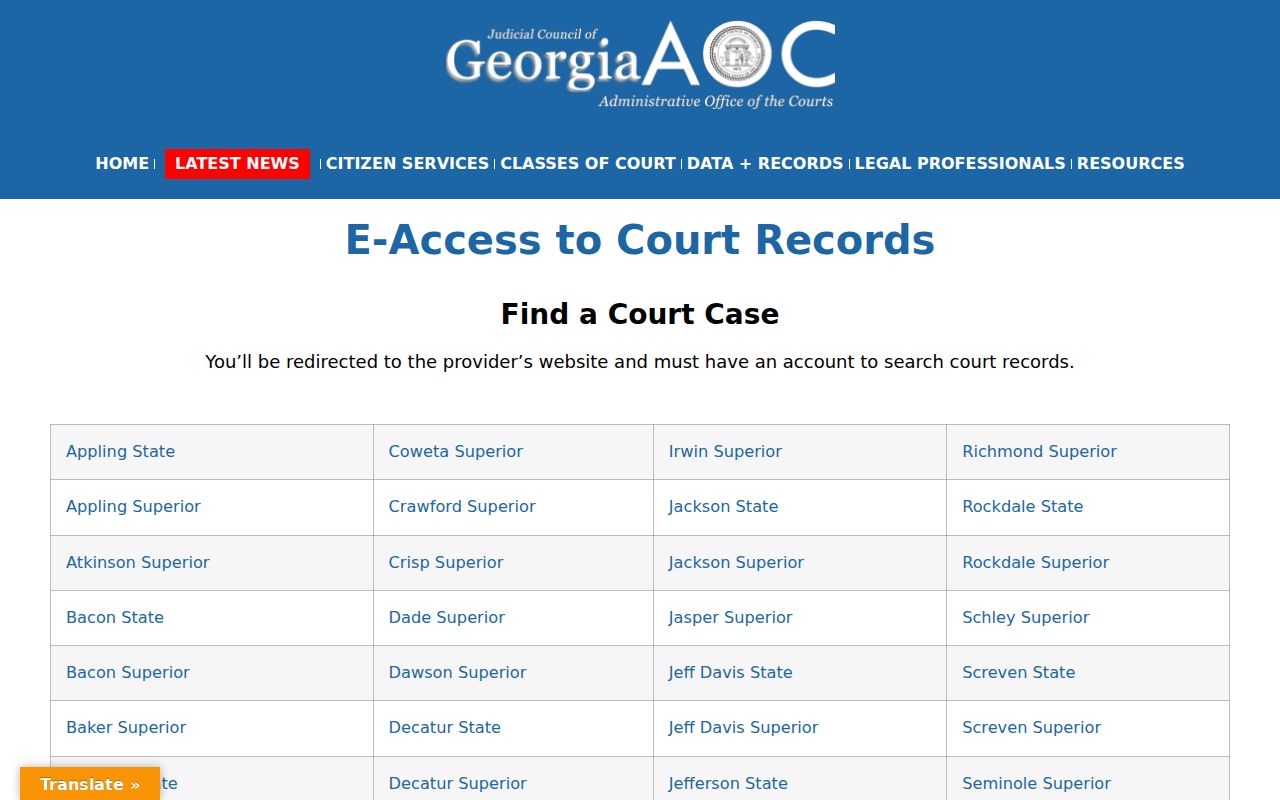
The provider map is a routing tool; the local clerk remains the custodian of the file.
Lawful use. Peachtree City public records support family, property, safety, and civic research. Never use a name or address to stalk, threaten, harass, or harm anyone.
Peachtree City Vital Record Limits
Vital records do not operate like open property rolls. Georgia DPH holds births and deaths from January 1919, marriage applications from 1952 through 1996, and divorce verifications. Fayette Probate Court handles marriage records outside that state range when the license was issued there, plus local birth and death service. Fayette Superior Court supplies the actual divorce decree when that court granted it.
Birth and death certified copies require legal eligibility and identification under Georgia law. Historical death certificates from 1919 through 1943 are available through Georgia Archives. Current requests can go through a county counter, state counter, mail, or an approved online service. A search fee pays for the search and does not promise a record will be found.
The Georgia DPH request-method page sets out the available order channels.
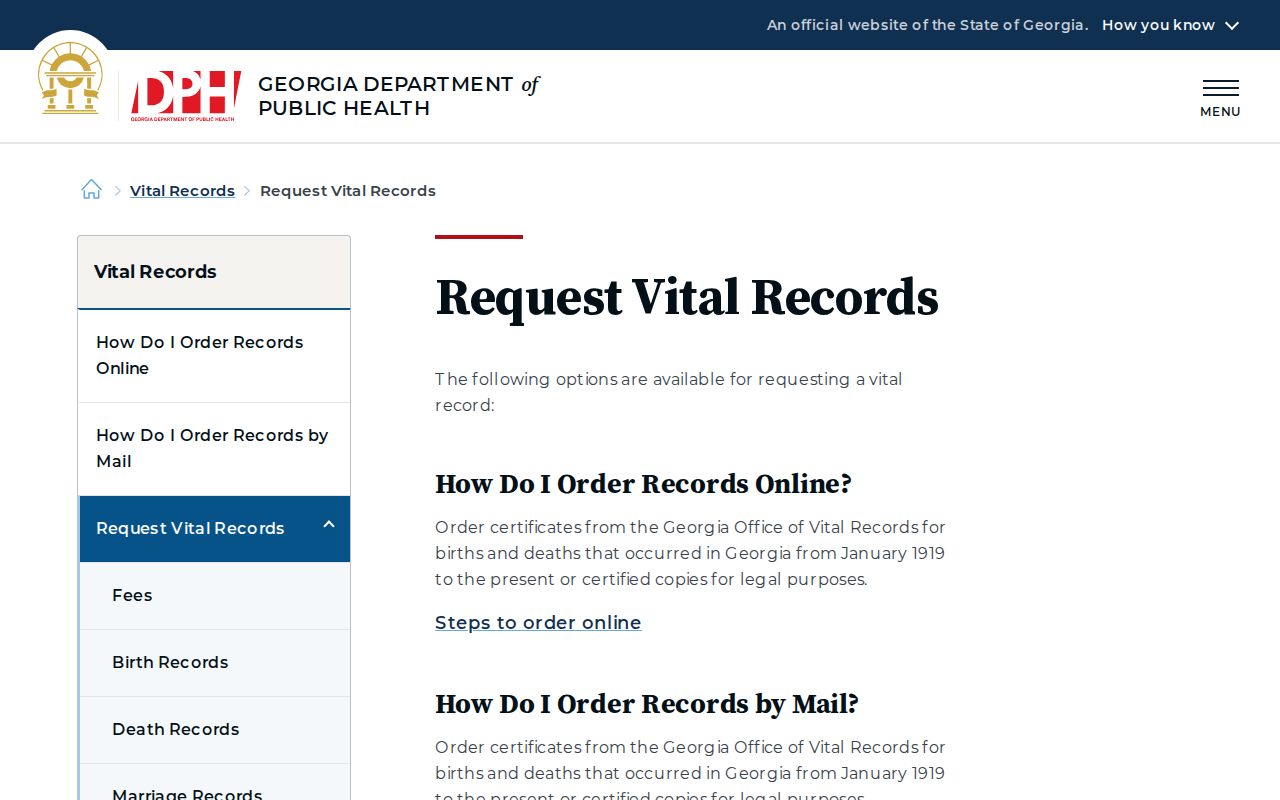
The live page should be checked before travel because service hours and processing windows can change.
Request Peachtree City Records
The Georgia Open Records Act, O.C.G.A. § 50-18-70 et seq., gives any person a route to inspect or copy existing public records. Peachtree City accepts requests through NextRequest or email to the city clerk. A useful request names the record, date range, address, person, department, and preferred format. The city must provide access, cite an exemption, or give a timetable within three business days.
An agency need not create a list that does not exist. That rule is important for resident research. Ask for a known permit report, city record, or correspondence set instead of demanding that staff compile a new residents directory. Search and redaction charges may apply after the first 15 minutes, and the city provides an estimate before work. Fayette County uses its own request-routing form for county departments.
The Peachtree City open-records instructions show the city clerk's request channels.
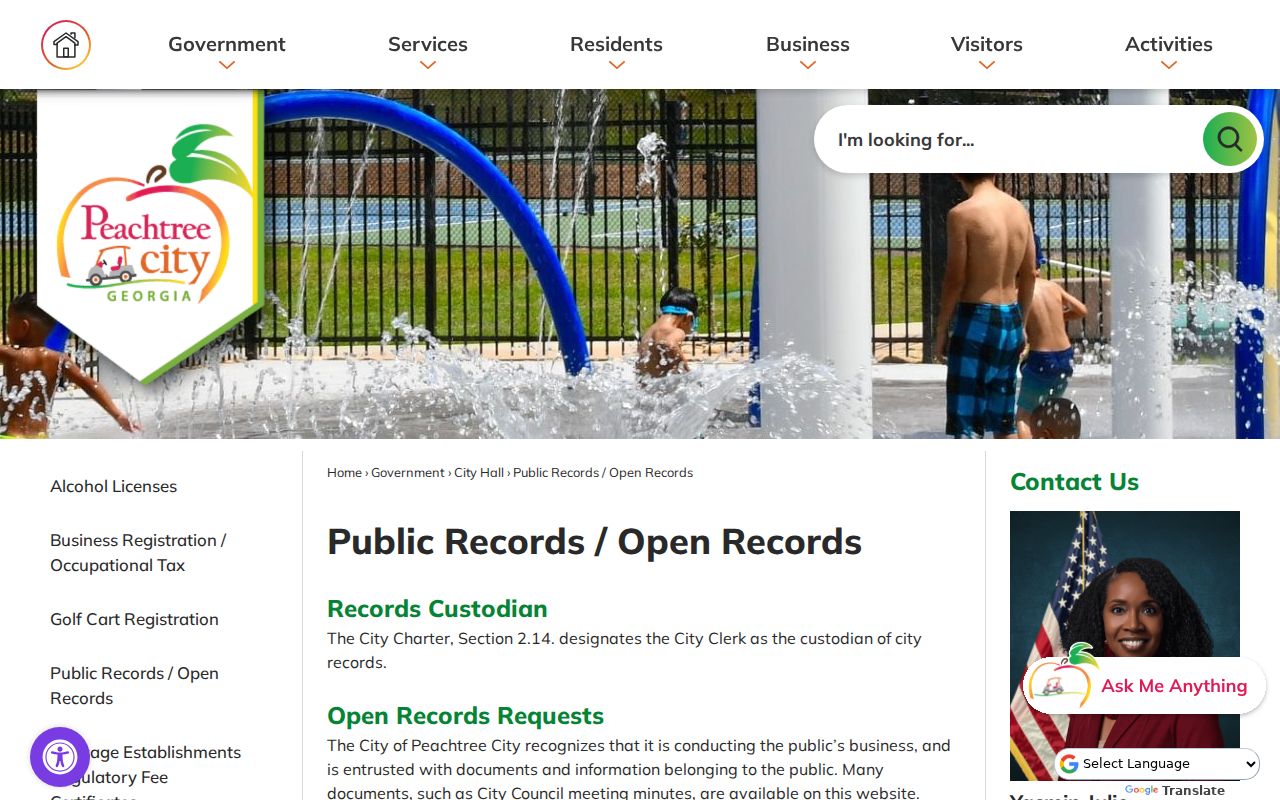
The linked instructions also explain estimates, redactions, and the three-business-day response framework.
Match Peachtree City Identities
A same-name result should have two independent anchors before it is accepted. Pair the name with a parcel ID, street, filing year, middle initial, spouse, case role, license number, or known associate. Date-stamp every finding. Tax rolls, voter records, permits, and court dockets change on different schedules, so disagreement may reflect timing instead of an error.
When an official record is wrong, contact its custodian. The assessor handles tax-card mailing corrections, the clerk handles recorded-document questions, Elections handles voter registration, the court clerk handles docket or file matters, and DPH or Probate handles vital records. A commercial index cannot correct the underlying public record.
What if the name still does not match? Try maiden names, initials, business entities, spelling variants, and the older legal description. Then ask the custodian whether the missing years require an in-person book or file search.
Trace Peachtree City Heirs
Probate becomes useful when a property or obituary trail ends with a deceased owner. Fayette Probate Court keeps estate petitions, wills, and related proceedings. A petition may identify the decedent, petitioner, heirs, addresses, and case year. Guardianship and mental-health material may be restricted, so absence from a public view is not proof that no file exists.
Begin with the death date and county, then ask for the estate index or file by the decedent's full name and approximate year. Compare heirs named in the probate papers with deeds and obituaries. If land passed through an estate, the later deed or assent may cite the probate case. This is a family-history and estate trail, not proof of anyone's current home.
Peachtree City Historical Directory
Peachtree City was chartered in 1959, so its strongest historical resident collection is not a long run of nineteenth-century city directories. The appointment-only Joel Cowan History Room opened in 1987 and preserves developer files, city records, civic publications, photographs, maps, newspapers, drawings, and oral histories. Its interview project began in 2002 and includes searchable transcripts, abstracts, page references, and timestamps.
For land before the planned city, move from modern plats and legal descriptions to Fayette deeds, early tax digests, census records, cemetery publications, and Georgia Archives microfilm cards. The first Fayette tax digest covers 1823 through 1834, while a county cemetery survey helps connect older families to burial grounds. The dedicated Peachtree City city directory page covers the collection workflow in depth.
Peachtree City Directory Boundaries
Public records do not name every person in a household. Utility customer data, motor-vehicle addresses, protected voter addresses, sealed cases, juvenile files, and many vital records remain limited or closed. Private HOA rosters are not public merely because an association serves a Peachtree City neighborhood. A ZIP result validates mail format, not occupancy or city jurisdiction.
Use the least intrusive source that answers the question. Link back to the official custodian instead of republishing personal details. Confirm a seller through a recorded deed, reconnect with relatives through consent-based channels, and use probate or archives for family history. If a search creates a safety concern, stop. Georgia stalking and harassing-communications laws apply even when the first fact came from a lawful public index.
Note: VoteSafe and Safe at Home exist so qualifying people can participate in public life without exposing a residence address.