
Peachtree City Previous-Resident Sources
The useful source depends on the age of the address. A present-day parcel begins with qPublic. The deed books reach back through Fayette County's creation, but older web coverage has an unposted cutoff. Named federal census schedules stop at 1950 under the 72-year release rule, nine years before Peachtree City's charter. City files become strongest after planned development began.
| Source | Local time span | Where held | What it can show |
|---|---|---|---|
| Fayette deeds and indexes | 1821-present; web cutoff unposted | Fayette Clerk; early film at Georgia Archives | Owners and legal description |
| Tax digests | Published first digest 1823-1834; later series vary | Historical Society, Archives, assessor | Taxpayer, property, and value |
| Federal census | Fayette named schedules 1830-1950 | NARA and genealogy databases | Households at an enumeration place |
| City historical files | 1950s-present | Joel Cowan History Room | Developers, plats, civic life |
| Permit reports | Online 2021-present; older by request | Peachtree City | Construction and alteration dates |
| Reverse directories | Exact local years not posted | Library or PINES inquiry | Address-to-occupant when held |
Start with deeds for ownership, directories or census for occupancy, and permits for the building itself. Each row answers a different question. A tax digest may predate the modern house, while a permit may name an applicant who never lived there.
Start Peachtree City House Records
Search the Fayette qPublic parcel roll by Location Address. Copy the owner, situs address, parcel ID, legal description, subdivision and lot, most recent sale date, and deed book/page. The mailing address receives tax notices and can differ from the physical site. A homestead indicator may support owner occupancy, but remains dated evidence.
Open the GIS map and confirm that the parcel shape matches the target. Address history in a planned city often crosses a replat or development phase. The parcel number helps with current systems, while the legal description is the durable link to older deeds. Preserve both before pursuing previous residents.
Note: A matching owner and situs address supports a connection at that date, not a full list of occupants.
Trace Fayette Owners Backward
The Fayette property index connects the current parcel to prior owners. An index entry is a pointer, not a certified deed. The clerk warns that online data is informational and primary records should be checked.
- Take the current purchase deed book/page from qPublic or the clerk index.
- Read the deed for the seller, called the grantor, and verify the same lot or land description.
- Search that seller as a grantee, meaning the buyer in an earlier deal.
- Repeat only when the legal description matches. Do not join two people merely because their names match.
- When the web index stops, inspect deed books at the clerk or identify early film through Georgia Archives county cards.
- Grantor and grantee
- The grantor transfers the property; the grantee receives it.
- Chain of title
- The linked series of transfers for the same land.
- Legal description
- The recorded land identity, often a subdivision lot or land-lot description.
- Enumeration district
- The geographic area assigned to a census taker.
Counter inspection at the Fayette Clerk is free during public hours, 9 a.m. to 5 p.m. weekdays. Regular copies can be ordered for $1 per page prepaid; other copy and certification charges vary by method. For an official copy, use the clerk's linked eCertification route.
The Fayette electronic certification service is pictured below.
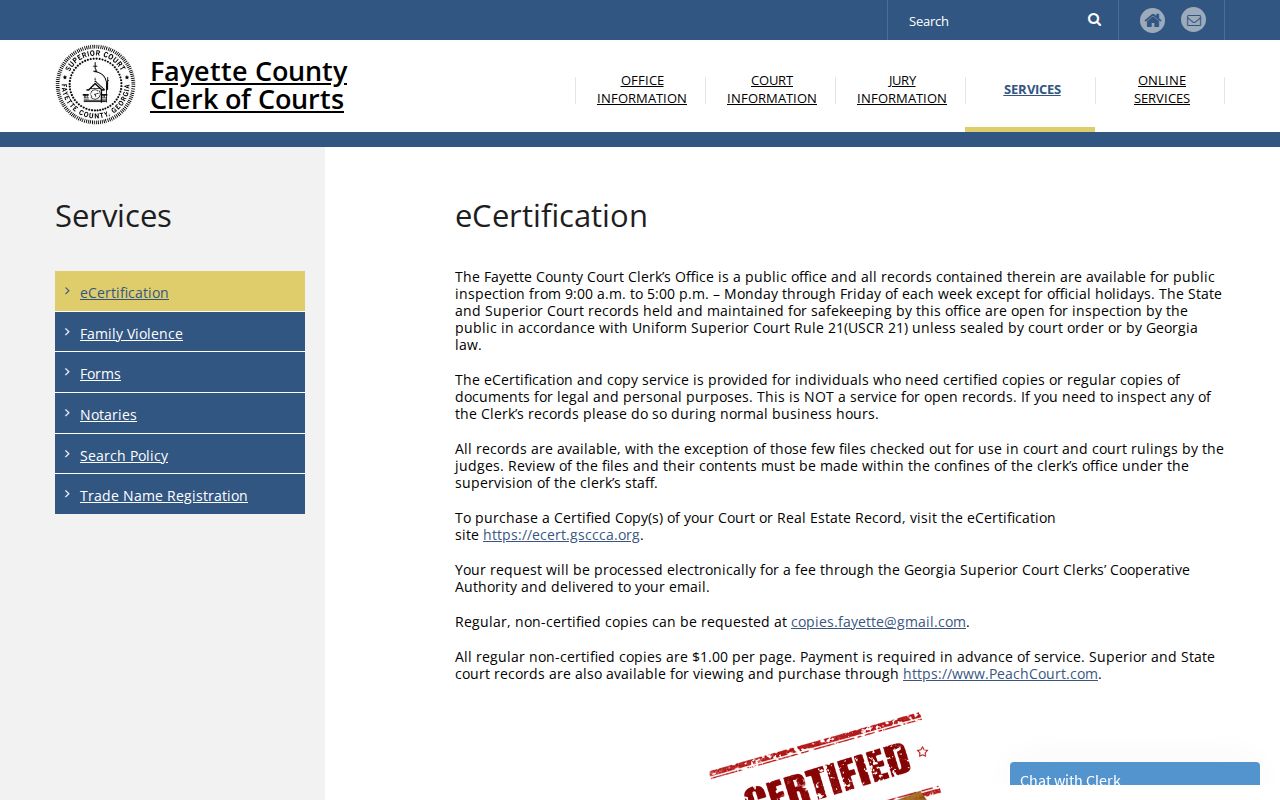
Certification authenticates the copy; it does not turn an owner into proof of occupancy.
Move Peachtree City Records Offline
The official Fayette index does not publish its exact online starting year. Do not guess. Call the Fayette Clerk of Superior, State and Magistrate Courts at 770-716-4290 or inspect the older deed indexes at One Center Drive, Fayetteville. For early record series, the Georgia Archives Virtual Vault county card describes title, volume, date, and reel.
The clerk's public office route is shown below.
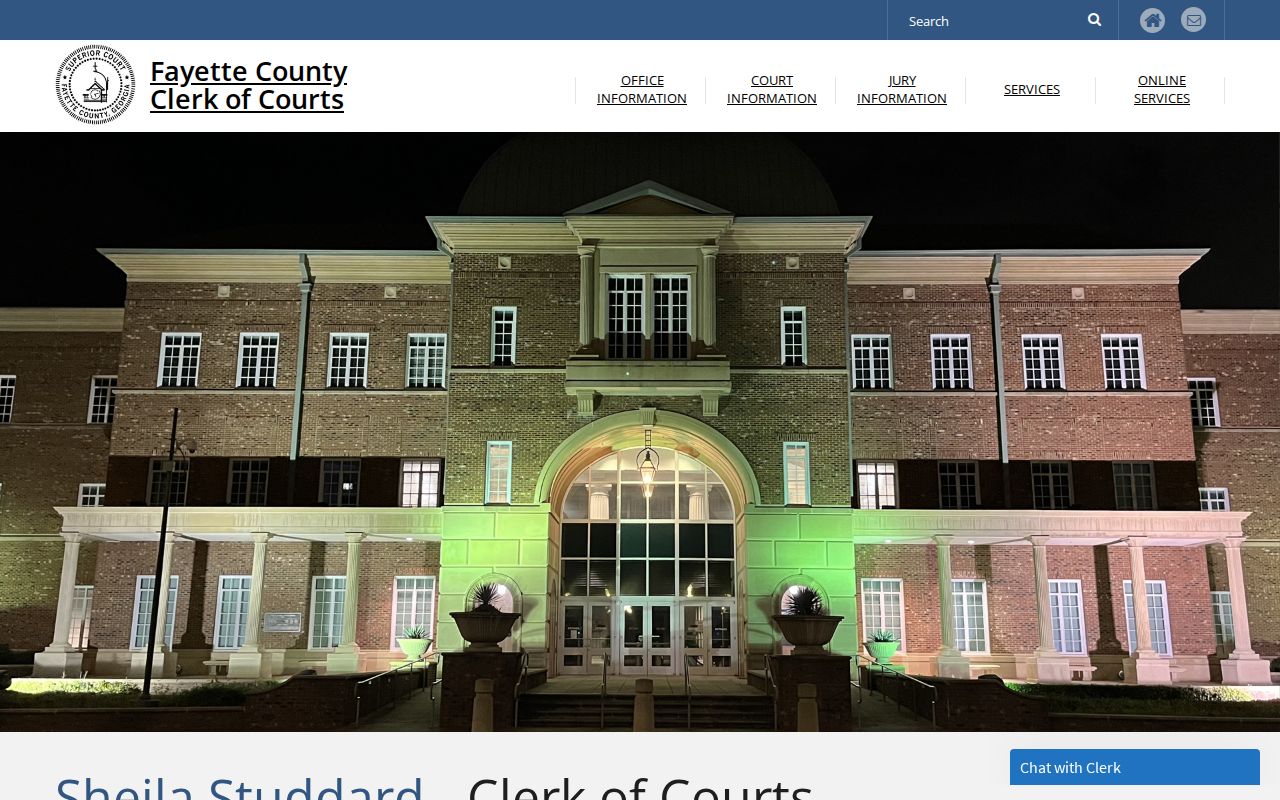
This office is the custodian for deeds and plats, while the assessor only summarizes current parcel data.
For microfilm planning, use the Georgia county microfilm catalog.
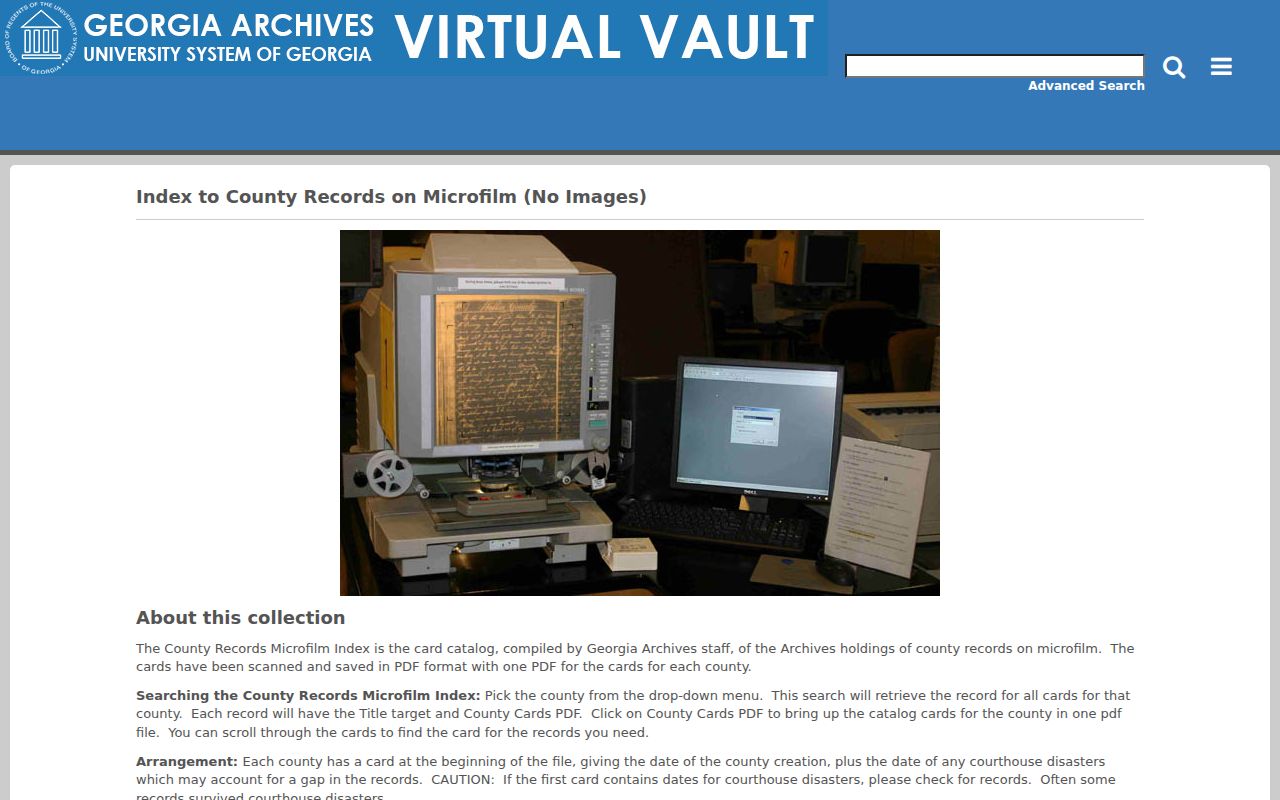
The first Fayette card is also the proper source for formation and disaster notes; research found no verified catastrophic county courthouse-record loss.
Bridge Peachtree City's 1959 Charter
Peachtree City was chartered March 9, 1959 after developers assembled more than 12,000 acres. Before planned streets, prior-resident research relies on Fayette land-lot deeds, plats, tax digests, and census geography. After charter, city permits, planning maps, newspapers, marketing files, and civic records become useful. The address itself may be much younger than the tract.
Walk a subdivision plat backward to the land district and land lot. Early transfers may name Peachtree Corporation of Georgia or Garden Cities Corporation rather than a person. That corporate phase reflects local development history. It should not be mistaken for a missing household.
The Joel Cowan History Room preserves developer files, maps, photographs, newspapers, civic publications, and oral histories. Its appointment-only collection can explain when a village street first appeared. No verified citywide renumbering or Peachtree City Sanborn sheet set was found, so plats, aerials, developer maps, and permits are safer tools.
Village growth also changes the search terms. Aberdeen, Braelinn, Glenloch, Kedron, and Wilksmoor can appear in planning records, civic files, or newspaper descriptions even though they are not separate towns. Search a village name with the subdivision, corporate owner, and land-lot reference. The result may explain how a tract became a street before any previous residents appear under the modern address.
Date a Peachtree City House
Peachtree City publishes permit reports from 2021 forward and routes pre-2021 reports through a records request. Search the exact address and likely variants. A permit or certificate of occupancy can date a build, addition, or major alteration. Planning and zoning files may connect that work to a lot or subdivision.
Permits supplement the ownership trail. An applicant or contractor is not necessarily a previous resident. Compare the permit date to sale dates, aerials, plats, and the assessor's building characteristics. If the address does not appear in an old report, search by subdivision and legal lot before concluding that no record exists.
Note: The recent downloadable archive and older request-only archive are separate access channels.
Find Peachtree City Past Households
Owners are only half the story. A reverse directory, when a suitable regional volume exists, is arranged by street and house number and may name a subscriber or occupant for one edition. The library does not publish a verified Peachtree City year run online. Ask the History Room or search PINES by title and year rather than assuming continuous coverage. Full collection context belongs with the Peachtree City city directory.
- Check each available reverse-directory edition for the address and copy its abbreviation key.
- Compare the same name in the alphabetical section, noting spouse, phone, or cross-reference fields.
- For 1950 or earlier, locate the property in the proper census enumeration district and read nearby households.
- Bridge later gaps with deeds, permits, newspapers, and dated civic records.
The 1950 census is the newest named federal schedule available in 2026. It predates the city charter, so search Fayette County farms, families, land lots, and nearby communities rather than expecting a modern Peachtree City street. Later census products give statistics, not named households.
Build a dated worksheet with one row per source year. Record the address as printed, person or owner, source title, page or instrument, and any conflict. A deed year may establish title while a directory edition names a subscriber and a census names a household. Keeping those roles separate avoids forcing three different record types to answer the same question.
Close a Peachtree City Resident Trail
When a person disappears from an address source, obituaries and probate can explain the change. An obituary may name relatives, former communities, and a cemetery. A Fayette Probate Court estate petition or will can identify a decedent, petitioner, heirs, and addresses, though sensitive guardianship and mental-health files may be restricted. Marriage records help bridge maiden and married names.
The Fayette County courts overview is shown below as the routing point for county court offices.
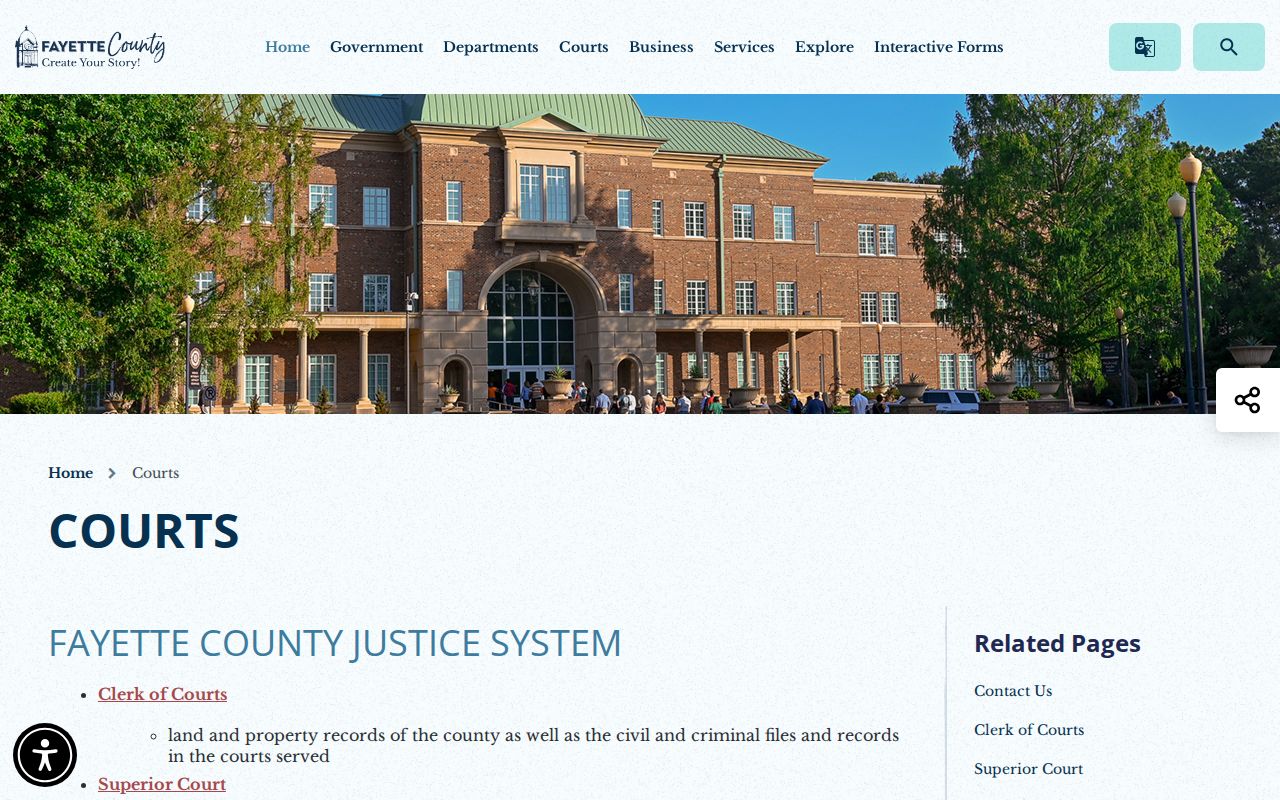
Use Probate Court for estates and wills, and the Clerk for Superior Court files and recorded real estate.
Federal litigation is separate from Fayette records. If a name or property trail points to a federal matter, the official PACER service is the relevant index.
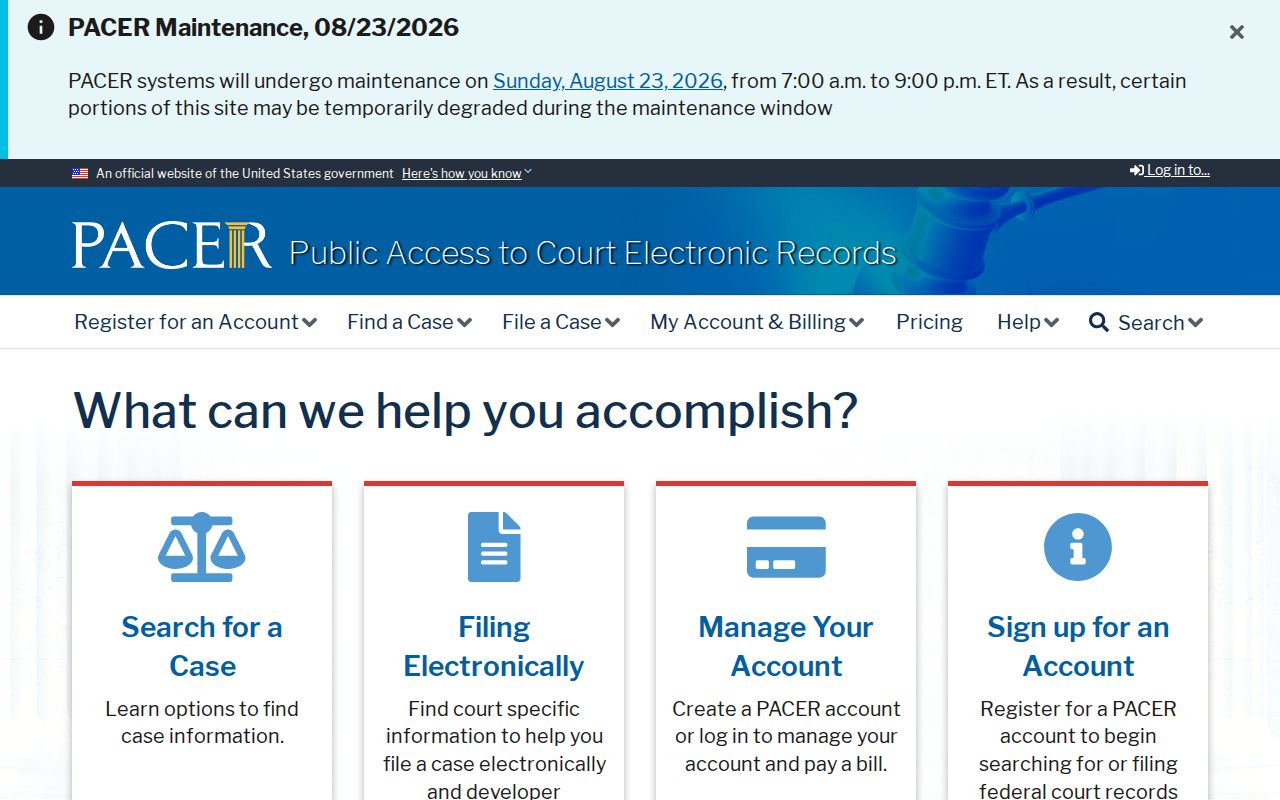
A federal case is supporting evidence only; match dates and identifiers before connecting it to the address.
Lawful use. Previous-resident research is appropriate for house history, genealogy, and heir matters. Never use it to track, threaten, or harass a living person.