
Peachtree City Directory Holdings
Peachtree City city directory research does not begin with a verified, continuous Polk run. No official catalog page states exact years or publishers for local city or criss-cross books. That gap matters. Peachtree City was chartered in 1959, while Fayette County's named records extend far earlier. The sound approach is to use the proven local and county collections below, then ask staff to confirm any regional telephone or reverse volume by title page and edition.
| Historical collection | Time covered | Repository | How to reach it |
|---|---|---|---|
| Joel Cowan History Room | Formation era, 1950s to present | Peachtree City Library | Appointment, in-house; selected items online |
| Peachtree City oral histories | Interviews begun in 2002; memories reach the founding era | Library website | Free transcripts, abstracts and audio |
| Developer, newspaper and civic files | Mainly 1950s forward | Joel Cowan History Room | Appointment and digital selections |
| Fayette deeds, tax, probate and marriage film | County created in 1821; series vary | Clerk and Georgia Archives | Online catalog, counter and onsite film |
| Federal census schedules | Fayette named schedules, 1830 through 1950 | National Archives and genealogy libraries | Free federal and partner access |
| City and reverse directories | Exact local years and publishers not posted | Library or PINES inquiry | Confirm each physical volume before citing it |
That last row should stay a question until a librarian checks the shelf or PINES record. Atlanta or Fayette regional books may list Peachtree City homes without placing the city's name in the main title. A broad catalog search can find them, but it cannot replace inspection of the edition, coverage statement, and abbreviation key.
Peachtree City History Room
The Joel Cowan History Room is the most local directory collection. It holds developer and marketing files, city department records, civic club publications, photographs, maps, drawings, newspapers, audio, art, and textiles. These sources can identify founders, public figures, club officers, firms, streets, and village projects that never appeared in one bound residents list.
Access is by appointment. The material is non-circulating and used in-house, so contact the Peachtree City Library before visiting. Give staff a surname, street, subdivision, organization, and date range. An organization name may work better than a person's name because early files often sit under a developer, civic group, or city department.
The official History Room page shows the scope and appointment policy. Review that source before arranging a visit.

The captured page confirms that the Peachtree City city directory trail is a staffed archival collection, not a self-serve list of current residents.
Search Peachtree City Records Online
Remote research starts in two separate gateways. Search the History Room repository by surname, company, village, subdivision, or street. Then repeat the search in the Digital Library of Georgia Peachtree City collection. Their metadata can expose different paths to the same item, so a blank result in one is not proof that the archive holds nothing.
Record the item title, creator, date, collection name, and stable link. A photograph caption may identify several people. A marketing brochure can date a street or village. Council and civic files may tie a name to an office or event. None proves continuous residence by itself, but each can anchor a search in a known place and year.
The library's public page provides the catalog and local-history route.

This library view gives researchers the practical bridge from general catalog searching to the appointment-only local files.
Peachtree City Oral Directory
The oral-history archive adds a human index to Peachtree City directories. Interviews begun in 2002 include founding resident Joel Cowan, W. Floy Farr, and former mayors. Transcripts carry abstracts, page references, and timestamps. A researcher can jump to a discussion of land assembly, a company, a village, or a civic event instead of listening blindly to hours of audio.
Use names from an interview as leads, not final proof. Memories can compress dates or mix similar events. Compare a statement with a dated deed, plat, newspaper, meeting record, or photograph caption. The method is especially useful for early planned-community history because corporate owners may appear in deeds before individual households do.
Note: An oral-history timestamp is a precise citation aid, but it still needs support from a dated record when identity or chronology matters.
Read Peachtree City Directory Entries
No digitized local entry was verified during research, so use a reading inventory rather than a made-up example. First photograph the title page and abbreviation key. Then transcribe every mark exactly. A short code may distinguish a home from a business address, a spouse from another resident, or an owner from a renter in that publisher's system.
| Name | Surname, given name, initials, and sometimes a spouse in parentheses |
|---|---|
| Status | Widow notation or another household label supplied by the publisher |
| Work line | Occupation, firm, or business address when that edition includes it |
| Home line | House number, street, telephone, and possible owner or renter mark |
| Cross-reference | A pointer to a second spelling, business entry, or street-order listing |
Initials and married-name changes are common traps. Search a spouse, former surname, telephone number, and street entry as separate routes. A missing name can mean the person moved, died, was unlisted, or fell outside that edition's coverage.
- Criss-cross directory
- A directory arranged by street and house number instead of by surname.
- Householder index
- An index focused on the person listed as the main household contact.
- Abbreviation key
- The publisher's own legend for status, work, residence, and cross-reference marks.
Before Peachtree City Directories
The city charter dates to March 9, 1959. Earlier Fayette County people will not be indexed under a city that did not yet exist. Search land district and lot, tract owner, nearby community, or family name. Fayette deeds, probate files, marriage records, tax digests, cemetery books, and census schedules form the older directory.
The Fayette Historical Society research center keeps county and family material at 195 Lee Street in Fayetteville. Published aids include The History of Fayette County, Georgia 1821-1971, the first tax digest covering 1823-1834, and a 2005 survey of all known Fayette cemeteries. Public research hours are Tuesday 5:30 to 8 p.m. and Thursday and Saturday 10 a.m. to 1 p.m.; the phone is 770-461-9270.
Check the society's current site before a research visit.
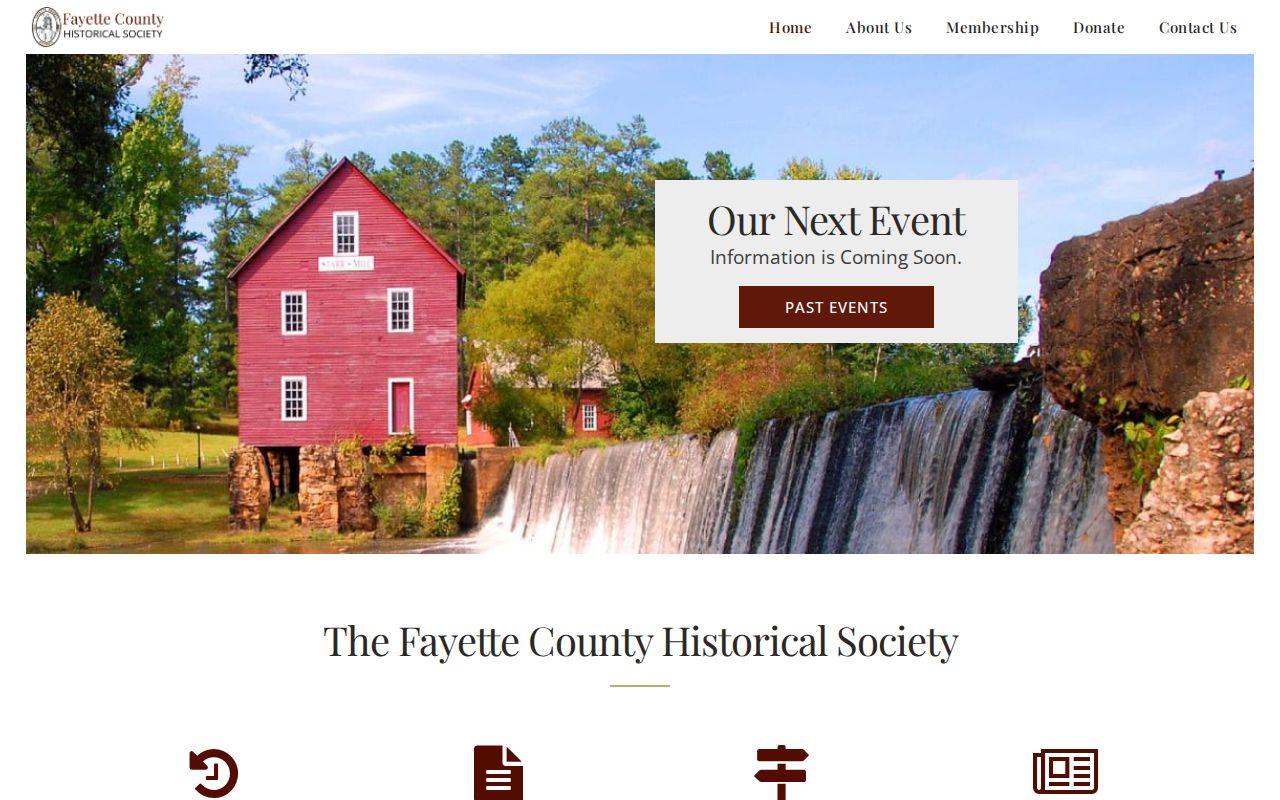
The society extends a Peachtree City city directory search into the county families and burial grounds that predate the planned city.
Peachtree City Records Timeline
Peachtree City records change sharply at the charter. The timeline helps choose the right place name and source type before searching.
| Date | Directory milestone |
|---|---|
| 1821 | Fayette County was created; county land and court records begin the older trail. |
| 1830 | The first Fayette federal census supplies named households. |
| 1950 | The newest public named federal census in 2026 predates the city. |
| 1959 | Peachtree City was chartered after developers assembled more than 12,000 acres. |
| 1987 | The Joel Cowan History Room opened. |
| 2002 | The oral-history program began recording founding-era memories. |
The planned five-village pattern means streets appeared in phases. Aberdeen, Braelinn, Glenloch, Kedron, and Wilksmoor are strong terms for newspapers, maps, permits, and archive descriptions. They are not separate legal jurisdictions.
The city's history and document page sets out that development context.
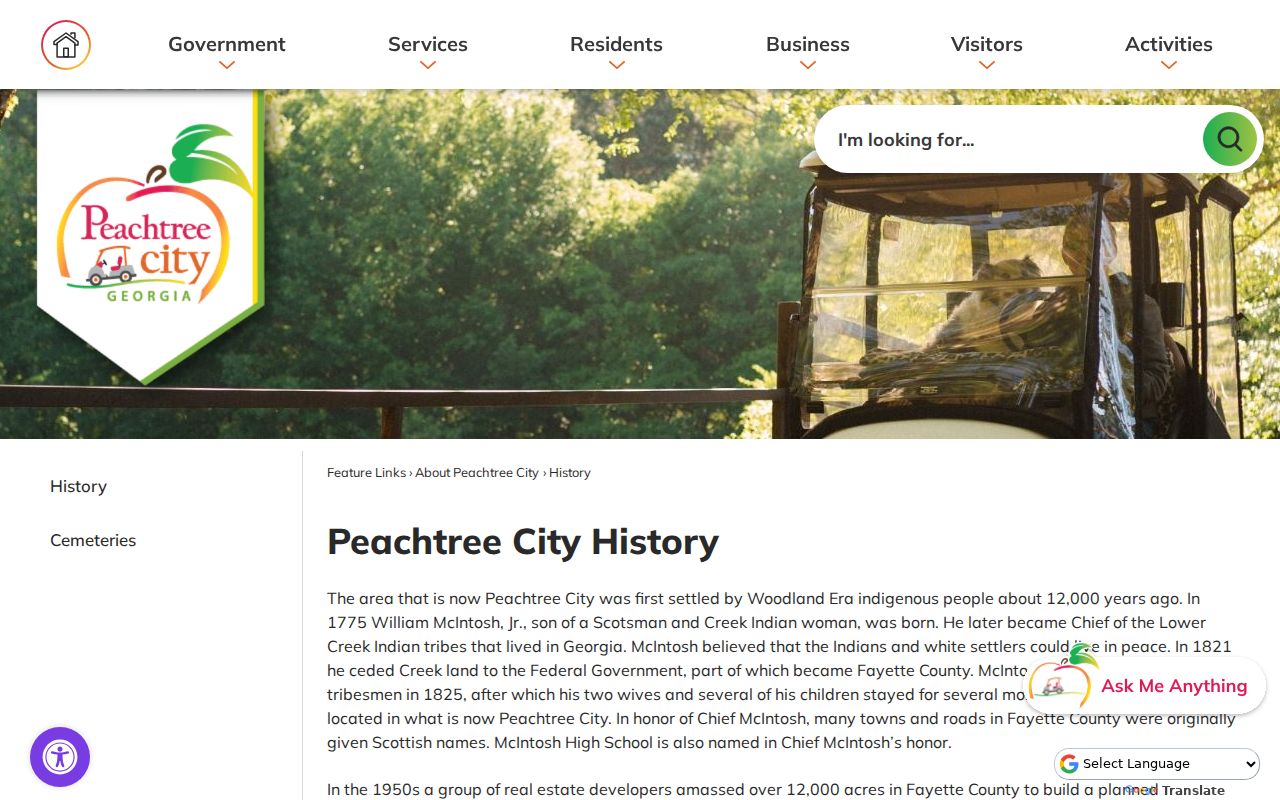
The official chronology explains why a Peachtree City directory must move from old county land records into modern village and civic files.
Bridge Peachtree City Census Gaps
The federal 72-year release rule makes the 1950 census the newest named population schedule open in 2026. It is nine years older than Peachtree City. Use it to locate pre-city families and farms, then shift to deeds, plats, developer records, newspapers, telephone books, and oral histories. Later census products describe groups and trends, not named residents.
Search the National Archives census research portal by county, enumeration district, and household. Keep the exact place shown on the schedule. A present Peachtree City address may have had only a land-lot description or rural route at the time.
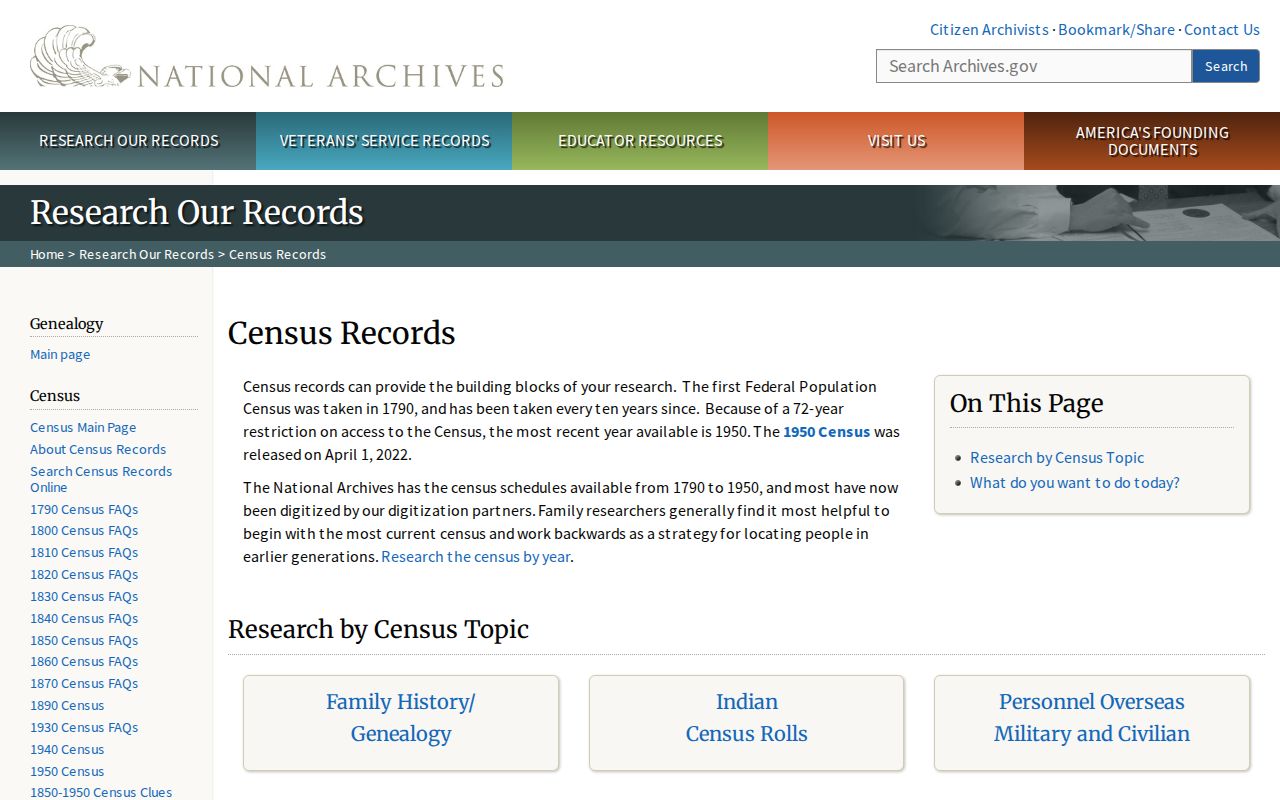
The census portal supplies the named pre-charter baseline that later local city directories and archive files can carry forward.
Trace Peachtree City Families
A household trail works best when each source has a clear date and role. Do not treat a directory line as proof of a full household. Pair it with a deed, census, obituary, probate file, or dated civic record.
- Start with an exact surname, address, subdivision, or known organization. Search each available directory year and record the title and edition.
- Compare the alphabetical entry with any reverse section. Save the spelling, spouse, phone, work line, address, and publisher's symbols.
- Bridge missing years through the deed book and page, assessor sale data, city maps, or a dated newspaper notice.
- For 1950 and earlier, match the household to the federal census by county, place, relatives, and nearby names.
- Use probate, cemetery, and obituary evidence to explain a disappearance. Verify each reported relationship against a primary record when possible.
For a modern address-keyed trail, the Peachtree City street directory owns the parcel and deed workflow. The historical city directory task is to preserve the edition, context, and change over time.
When City Directory Years Vanish
A missing year may mean there was no local edition, the volume carried a regional title, the repository has a gap, or the household was unlisted. It does not prove that a person left Peachtree City. Ask the library which telephone, suburban, school, church, civic, and criss-cross volumes exist for the exact period.
If the shelf fails, search PINES for Fayette histories, cemetery works, tax digests, school annuals, and telephone books. Then use the Georgia Archives county microfilm cards to find deed, probate, marriage, and tax series. A county card describes film; it is not an image of the underlying record.
Photograph the title page, inclusive years, publisher, and key before taking names from any book. That small habit prevents a regional directory entry from being mislabeled as a complete Peachtree City resident roll.